Your Partner Thinks CBD Is a Fancy Placebo. Here's How to Have That Conversation Without Losing Your Mind
You've found something that works for you. Maybe it's that the Sunday-night anxiety doesn't spiral the way it used to. Maybe your post-workout recovery is noticeably smoother. Maybe you just sleep better, and the difference in how you feel by Wednesday is hard to argue with.
And then your spouse or partner glances at your gummies on the kitchen counter and says, with that particular tone, "You know that's probably just a placebo, right?"
Deep breath.
Here's the thing: they're not entirely wrong to ask the question. And the way you respond to it matters more than you might think — both for your relationship and for any chance of them ever actually trying CBD themselves.
First, Give the Skeptic Some Credit
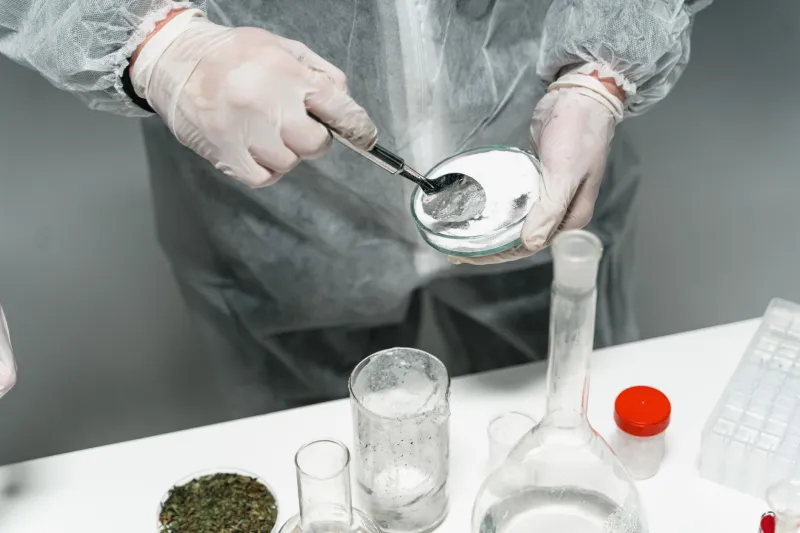
Healthy skepticism about wellness products is not stupidity. It's actually the correct default setting in an industry that has, historically, made some wildly overstated claims. For every legitimate CBD brand publishing transparent lab results, there are others selling hemp seed oil in a fancy package and calling it CBD. The skeptic in your house has probably seen enough wellness trends come and go to be cautious.
Acknowledging that is step one. If you open the conversation by dismissing their skepticism as close-mindedness, you've already lost. Instead, try agreeing with part of what they're saying: "You're right that there's a lot of garbage out there, and the marketing can be ridiculous. But there's also actual science here — want to hear it?"
Most reasonable people, when they don't feel attacked, will say yes.
The Neuroscience That's Hard to Argue With
Here's where you can actually win a skeptic over — not with testimonials, but with biology.
The human body has an endocannabinoid system. This is not a controversial statement. It's in every major anatomy textbook, it was discovered by mainstream researchers in the early 1990s, and it's been studied extensively since. The endocannabinoid system consists of receptors (primarily CB1 and CB2), endogenous compounds your body produces naturally called endocannabinoids, and enzymes that break those compounds down.
This system plays a regulatory role across a wide range of physiological functions: mood, sleep, appetite, immune response, pain perception, and stress response, among others. It's essentially one of the body's primary homeostasis networks — a system dedicated to keeping things balanced.
CBD (cannabidiol) interacts with this system, though not the way most people assume. Rather than binding directly to CB1 or CB2 receptors the way THC does, CBD appears to work through multiple indirect mechanisms — inhibiting the breakdown of your body's own endocannabinoids, interacting with serotonin receptors, and influencing ion channels involved in pain and inflammation signaling.
None of this is fringe science. The FDA approved a CBD-based pharmaceutical drug (Epidiolex) in 2018 for the treatment of certain seizure disorders — which required the kind of clinical evidence the FDA demands for any approved medication. That's a meaningful data point for a skeptical partner who trusts mainstream medicine.
"But How Do You Know It's Not Just Placebo?"
This is the question that sounds like a gotcha but is actually a genuinely interesting scientific discussion.
The placebo effect is real and well-documented. If someone believes a treatment will work, there are measurable neurological and physiological changes that occur — changes in dopamine activity, changes in pain perception, even immune response shifts. The placebo effect isn't fake. It's biology.
But here's the thing: CBD has demonstrated effects in preclinical research on animals, and animals don't have expectations about their treatment. Rodents don't believe CBD will calm them down. Yet studies have shown measurable behavioral and physiological changes. That's not placebo — that's pharmacology.
You can also make a personal argument here: "I've tried a lot of wellness things that didn't work. I wanted them to work. They didn't. This one is different, and I noticed the difference before I was even sure what I was noticing." That's not proof, but it's honest — and honest is more persuasive than overselling.
What Not to Say (Seriously, Avoid These)
A few conversational landmines worth knowing about:
Don't say "it cures everything." It doesn't, and overclaiming is the fastest way to lose credibility with a rational person.
Don't cite random social media testimonials. Your skeptical partner will find the weakest one and use it to dismiss everything else.
Don't make it personal. "You never believe anything I say" is a relationship conversation, not a CBD conversation. Keep them separate.
Don't pressure them to try it. Nothing makes a skeptic dig in harder than feeling pushed. Offer once, leave it open, move on.
The Low-Stakes Entry Point
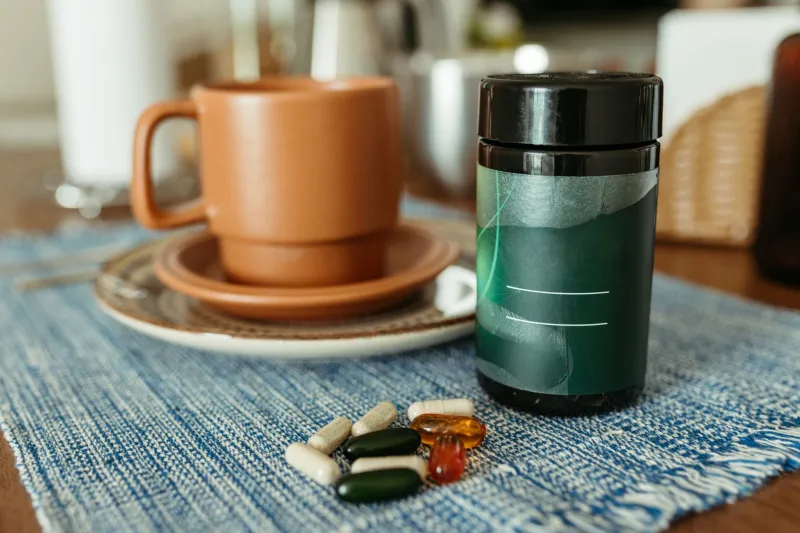
If your partner is even a little bit curious after the conversation, the lowest-friction entry point is a small dose of a high-quality gummy on a genuinely low-stakes evening — not a stressful night, not before an important event. Just a regular Tuesday when they can simply notice how they feel without any pressure to report results.
The goal isn't to prove you were right. The goal is for them to have an authentic experience and draw their own conclusions. That's what actually changes minds.
At Greener Farms CBD, we make our gummies with organic hemp and publish full third-party lab results precisely because we know some people are going to show up skeptical. We'd rather they check the data themselves than take our word for it.
The Bigger Picture
Living with a skeptic when you've found something genuinely useful can feel isolating. But it's worth remembering that their questions — How does it work? Is it tested? What's actually in it? How do you know it's not just in your head? — are the same questions every honest CBD brand should be able to answer.
If you're buying from a brand that can answer those questions clearly, you've already got the best argument you need. Hand them the lab report. Let the science do the talking.