What a CBD Lab Report Actually Tells You — And Why Honest Brands Aren't Afraid to Show It
Let's start with a blunt observation: a lot of CBD brands post a Certificate of Analysis on their website the same way a restaurant posts a health inspection grade in the window — they're required to have one, they'd prefer you didn't look too closely, and they're hoping the existence of the document is enough to satisfy you.
It shouldn't be.
A COA, done right and read correctly, is one of the most powerful tools a consumer has in an industry that still has more than its share of mislabeled, under-dosed, or contaminated products. At Greener Farms CBD, we think you deserve to understand what you're actually looking at — so let's break it down.
What a COA Is (And What It Isn't)
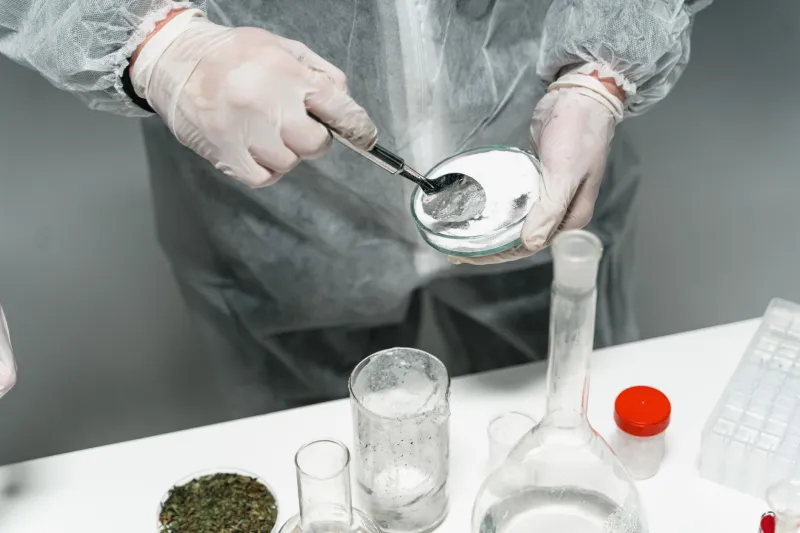
A Certificate of Analysis is a document produced by a third-party laboratory — meaning a lab that has no financial relationship with the brand being tested — that reports the chemical composition of a given product batch. The key phrase is third-party. A brand running its own internal tests and publishing those results is a bit like grading your own homework. The number might be accurate, but you have no real reason to trust it.
Legitimate COAs come from ISO/IEC 17025-accredited labs. That accreditation means the lab has been independently verified to meet international standards for testing competence. If a brand's COA doesn't name the lab, or if that lab isn't accredited, the document doesn't mean much.
What a COA is not is a blanket guarantee of quality. It's a snapshot of one batch at one point in time. A responsible brand tests every batch — not just the first run when they're trying to impress a retailer.
The Potency Panel: More Than Just CBD Numbers
The first thing most people look at on a COA is the CBD percentage or milligram content. That's reasonable — you want to know whether the 25mg gummy you bought actually contains 25mg of CBD. Potency discrepancies are shockingly common in the industry. A 2020 study found that a significant portion of CBD products tested contained meaningfully different amounts of CBD than their labels claimed, with some containing far less and others far more.
But the potency panel tells you more than just CBD content. A full cannabinoid profile will show you levels of:
- CBG (cannabigerol): An emerging cannabinoid associated with focus and anti-inflammatory properties
- CBN (cannabinol): Often linked to relaxation and sleep support
- CBC (cannabichromene): Being studied for mood and neurological benefits
- Delta-9 THC: This is the one that matters legally — federal law requires hemp-derived products to contain no more than 0.3% THC by dry weight
If a brand only shows you the CBD number and nothing else, they're either using an isolate (which isn't inherently bad, but worth knowing) or they're not being fully transparent about what's in the product.
The Safety Panels: Where Quality Actually Lives
Here's the section most consumers skip — and the one that arguably matters most for your health.
Pesticide screening checks for residues from agricultural chemicals. Hemp is a bioaccumulator, meaning it absorbs compounds from the soil readily. That's great for soil remediation projects, but it means hemp grown with pesticides can concentrate those chemicals in the final product. Organic farming practices and clean pesticide panels go hand in hand.
Heavy metals testing looks for lead, arsenic, cadmium, and mercury — all of which can accumulate in hemp grown in contaminated soil. This is a non-negotiable safety check, especially for products consumed daily.
Residual solvents testing matters for any extract made using chemical solvents like butane or ethanol. The extraction process should remove these entirely, but a COA confirms it actually did.
Microbial contamination panels check for mold, yeast, E. coli, and salmonella. Less glamorous to talk about, more important than almost anything else on the document.
A brand that publishes all four of these panels is telling you something important: they're not hiding anything.
Why Many Brands Won't Show You the Full Picture
Full-panel testing is more expensive than basic potency testing. For a brand operating on thin margins or cutting corners on sourcing, publishing a complete COA is both a financial cost and a liability — because a complete test might reveal something they'd rather you didn't know.
Some brands post COAs that are months or even years old. Some test only their raw hemp extract, not the finished product after it's been processed into gummies (which can introduce new variables). Some use labs that aren't accredited. Some make the documents genuinely difficult to find on their websites — buried in FAQ pages or requiring you to email customer service.
Transparency isn't complicated. If a brand makes it complicated, that tells you something.
How to Read a COA in Under Two Minutes
You don't need a chemistry degree. Here's a quick checklist:
- Check the lab name — Google it. Is it real? Is it accredited?
- Check the date — Is this a current batch? Within the last six months is reasonable for active inventory.
- Match the CBD content — Does the label claim match what the lab found? Within 10% is generally acceptable variance.
- Check THC levels — Should be at or below 0.3% for legal hemp products.
- Look for the safety panels — Pesticides, heavy metals, solvents, microbials. If they're missing, ask why.
- Scan for any "FAIL" notations — Legitimate labs flag when something exceeds acceptable limits.
The Greener Farms Commitment
Every batch of Greener Farms CBD gummies is independently tested by an accredited third-party lab, and those results are available to you — not buried, not paywalled, not selectively shared. We test for the full panel because our customers deserve to know exactly what they're putting in their bodies, and because we have nothing to hide.
In an industry still finding its regulatory footing, transparent testing isn't a marketing feature. It's the baseline standard every brand should be held to. We just think it's worth explaining why.