More Than Milligrams: How the Whole Hemp Plant Might Be the Secret to Better Results
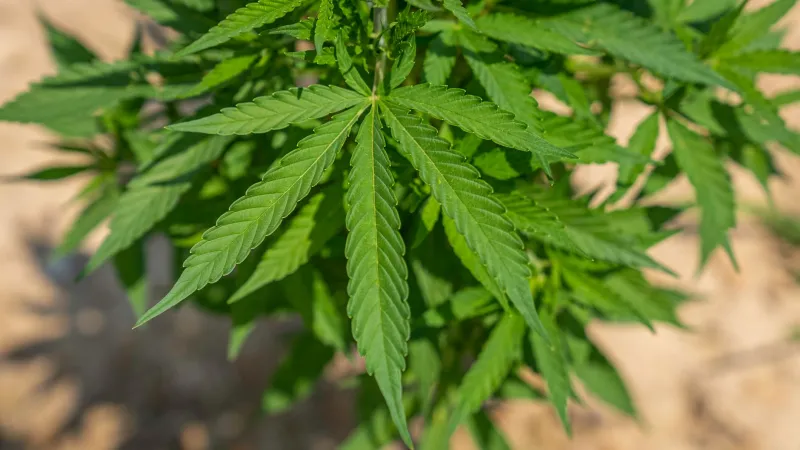
When most people shop for CBD gummies, they flip the package over, find the milligram count, and call it a day. Higher number, better product — right? Not necessarily. That logic assumes CBD is doing all the heavy lifting on its own. But if you dig into the actual science of hemp, you'll find something a lot more interesting going on beneath the surface.
It's called the entourage effect, and it's one of the most compelling — and most misunderstood — ideas in hemp wellness today.
What the Entourage Effect Actually Means
The term was first used in scientific literature back in 1998 by Israeli researchers Shimon Ben-Shabat and Raphael Mechoulam — the same Mechoulam who is widely credited with pioneering cannabinoid science. Their observation was straightforward but significant: compounds found naturally in the cannabis plant seemed to work better together than any single compound worked alone.
Think of it less like a solo artist and more like a full band. CBD is the lead singer, sure. But without the rhythm section — the terpenes, the minor cannabinoids, the flavonoids — the performance is noticeably thinner.
In a full-spectrum hemp product, you're getting that whole band. In an isolate product, you're getting just the one voice.
The Supporting Cast: Who's Actually in the Mix
Full-spectrum hemp extract contains a surprisingly diverse lineup of naturally occurring compounds. Understanding what each one brings to the table helps explain why the combined effect might outperform any individual ingredient.
Minor cannabinoids like CBG (cannabigerol), CBN (cannabinol), and CBC (cannabichromene) each interact with the body's endocannabinoid system in their own distinct ways. CBG, for instance, has been studied for its potential role in supporting focus and calm. CBN is often associated with relaxation. None of them are CBD — but all of them may contribute to the overall experience.
Terpenes are the aromatic compounds that give hemp (and every other plant) its smell and flavor. But they do more than smell nice. Terpenes like linalool (also found in lavender), myrcene (common in hops), and beta-caryophyllene (found in black pepper) have been studied independently for their potential wellness properties. Beta-caryophyllene, interestingly, actually binds to cannabinoid receptors in the body — making it one of the few terpenes that behaves almost like a cannabinoid itself.
Flavonoids are a class of plant compounds found across the food world — in blueberries, green tea, dark chocolate. In hemp, flavonoids like cannflavin A and cannflavin B are unique to the plant and have attracted research attention for their potential antioxidant properties.
When all of these compounds exist together in a single product, the theory is that they don't just add up — they multiply each other's potential through synergistic interaction.
What the Research Actually Shows
Here's where it's worth being honest: the entourage effect is a well-supported hypothesis, not a fully proven mechanism. Most of the direct human research on this topic is still developing. That said, the existing science is genuinely encouraging.
A 2011 review published in the British Journal of Pharmacology by Dr. Ethan Russo — one of the most cited researchers in this space — made a detailed case for how terpenes and cannabinoids work together, suggesting that full-spectrum preparations may offer broader benefits than isolated compounds for certain applications.
A 2019 study published in Frontiers in Plant Science examined full-spectrum CBD versus isolate in the context of inflammation-related outcomes. The full-spectrum extract showed what researchers described as a "bell-shaped dose-response" that the isolate did not — meaning it continued to perform across a wider range of doses rather than plateauing.
This matters practically. With isolate-based products, you often hit a ceiling where taking more doesn't seem to do more. Full-spectrum formulations may not have that same limitation, at least based on early findings.
Clearing Up a Common Misconception
A lot of people hear "full-spectrum" and immediately think "THC" — and then they get nervous. That's understandable given the cultural baggage around cannabis, but it's worth separating the facts here.
Full-spectrum hemp-derived CBD products are federally required to contain no more than 0.3% THC by dry weight. That's a trace amount — not enough to produce any psychoactive effect. It is, however, enough to potentially contribute to the entourage effect alongside the other compounds.
If even that small amount is a concern — due to workplace drug testing, personal preference, or any other reason — broad-spectrum products are a middle-ground option. They retain many of the minor cannabinoids and terpenes while going through an additional process to remove detectable THC. You lose a little of the full entourage, but you keep more of the supporting cast than an isolate would give you.
Why Your Gummy Choice Is About More Than the Number on the Label
Here's the practical takeaway: two gummies can both say "25mg CBD" on the front of the package and deliver very different experiences depending on what else is — or isn't — in the formula.
A gummy made with CBD isolate is giving you exactly that: pure, isolated CBD, nothing else. It's not a bad product, but it's a stripped-down one. A gummy made with full-spectrum hemp extract is giving you CBD plus the minor cannabinoids, terpenes, and flavonoids that naturally occur alongside it in the plant.
For health-conscious consumers who care about what goes into their bodies, that distinction is worth paying attention to. It's also why sourcing matters so much. The quality and diversity of the compounds in a full-spectrum product depend entirely on how the hemp was grown, harvested, and extracted. Organic farming practices, careful extraction methods, and third-party lab testing all affect whether those beneficial compounds actually make it into your gummy in meaningful amounts.
The Bottom Line
The entourage effect isn't marketing language — it's a legitimate area of scientific inquiry with a growing body of supportive research. The idea that hemp's natural complexity might be an asset rather than something to be refined away runs counter to how we usually think about supplements, but it aligns with how plant-based wellness has worked for centuries.
Next time you're comparing products, look past the milligram count. Ask what kind of extract is being used. Look for a certificate of analysis from a third-party lab that shows not just CBD levels but the full cannabinoid and terpene profile. That's where the real story is.
Because when it comes to hemp wellness, the whole really might be greater than the sum of its parts.